**Affiliate Disclosure**: When you buy through links on this page, we may earn
a commission. [Learn more](/affiliate-disclosure/)
You’re reading in bed. Movement catches your eye. A slim, silvery insect
darts across the baseboard and disappears behind the dresser. Fast — faster
than you’d expect. You jump up, move the furniture, and find nothing.
That was a **silverfish**. And where there’s one, there are usually more.
Silverfish don’t bite. They don’t spread disease. But they destroy things —
books, wallpaper, clothing, important documents. They’re also a sign of a
moisture problem that needs to be addressed. This guide will help you eliminate
them and keep them from coming back.
What Are Silverfish?
Silverfish (*Lepisma saccharinum*) are primitive, wingless insects that have
existed for over 400 million years — they were here before the dinosaurs.
Their name comes from their silvery-gray color and fish-like, wriggling
movement.
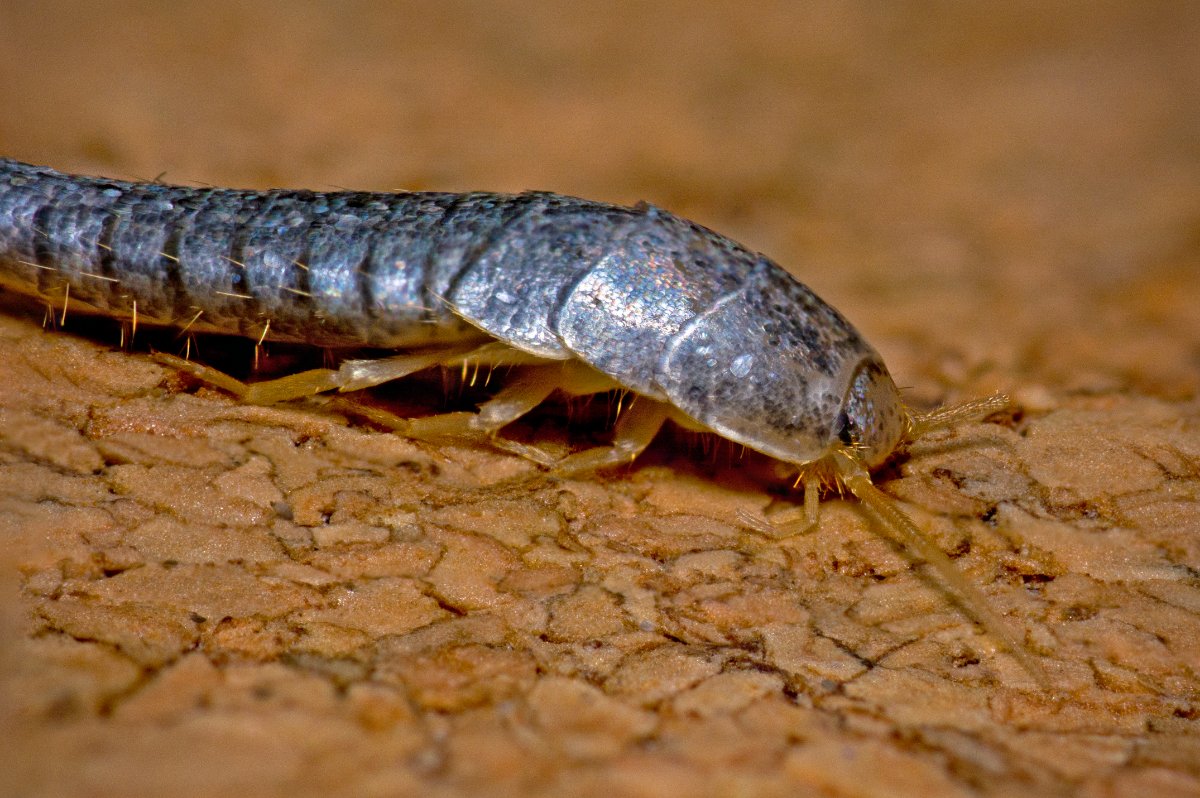
*Caption: Silverfish (Lepisma saccharinum). Note the three tail-like appendages
at the rear and the long antennae — distinctive features visible even from a
distance.*
Why They’re a Problem
| Damage Type | What They Target | Severity |
| Paper products | Books, documents, photos, wallpaper | Moderate |
|---|---|---|
| Clothing | Cotton, linen, silk (natural fibers) | Light to moderate |
| Food | Flour, cereal, pet food (dry goods) | Light |
| Wallpaper | The paste/glue behind wallpaper | Can cause peeling |
| Structural | None — they don’t damage wood or buildings | None |
They don’t bite humans and aren’t known to transmit disease. The main concern
is property damage, especially to irreplaceable items like old books or
photographs.
Why Are Silverfish in Your Home?
Silverfish need two things: **moisture** and **starch**.
They Thrive In:
- **High humidity** (above 75% relative humidity — common in bathrooms,
basements, and laundry rooms)
- Temperatures between **70–80°F** (21–27°C)
- Dark, undisturbed spaces
What Attracts Them:
| Attractant | Examples | Why |
| Paper | Books, cardboard boxes, magazines, documents | Cellulose + starch in paper |
|---|---|---|
| Fabric | Cotton, linen, silk clothing and bedding | Natural fibers contain starch |
| Adhesives | Wallpaper paste, book bindings, envelope glue | High starch content |
| Food crumbs | Flour, cereal, pet food, dried pasta | Carbohydrate source |
| Dead insects | Spider webs, dead bugs in corners | Protein supplement |
Where to Look:
Silverfish are nocturnal and hide during the day. Check these locations:
- **Bathroom**: Behind toilets, under sink cabinets, in linen closets
- **Kitchen**: Behind appliances, in pantry corners, under the sink
- **Basement**: Cardboard boxes, stored papers, laundry area
- **Bedroom**: Behind bookcases, in closets (especially if humidity is high)
- **Attic**: Stored boxes of documents, old books, fabric
Step 1: Reduce Moisture (The Root Cause)
Silverfish cannot survive in dry environments. **Moisture control is the
single most important long-term solution.**
Actions You Can Take Today
| Action | Impact | Effort |
| Run bathroom exhaust fan during and 20 min after showers | High | Zero (just use it) |
| Fix leaky faucets and pipes | High | Low to moderate |
| Use a dehumidifier in basement or humid rooms | High | Plug it in, set to 50% RH |
| Improve ventilation in humid rooms | Medium | Open windows, use fans |
| Seal gaps around tub/shower edges with silicone caulk | Medium | 30 min DIY |
| Don’t store books or cardboard in humid rooms | Medium | Move them |
**Target**: Get indoor humidity below 50–55%. Use an inexpensive
**hygrometer** ($5–10) to monitor problem rooms.
**[AFFILIATE: Hygrometer / humidity monitor — $5-10, essential first tool]**
Step 2: Remove Food Sources
Silverfish can survive for months without food, but removing their food
sources forces them to search elsewhere and makes traps more effective.
Immediate Actions
- **Remove cardboard boxes.** Replace with plastic storage bins with tight
lids. Cardboard is both food and shelter for silverfish.
- **Seal dry goods.** Transfer flour, cereal, pasta, and pet food into
airtight containers (glass, heavy plastic, or metal).
- **Vacuum thoroughly.** Pay special attention to baseboards, behind furniture,
inside closets, and under appliances. Dispose of the vacuum bag outside
immediately.
- **Reduce clutter.** Piles of magazines, newspapers, old documents, and
cardboard are silverfish buffets. Recycle or store properly.
- **Book maintenance.** If you have valuable books, periodically remove them
from shelves, dust them, and inspect for damage.
Step 3: Kill Existing Silverfish
After reducing moisture and food, it’s time to eliminate the silverfish
already inside your home. Here are the methods, ranked from least to most
chemical.
Method 1: Diatomaceous Earth (Recommended)
**Food-grade diatomaceous earth (DE)** is a fine powder made from fossilized
algae. It’s one of the most effective silverfish killers because:
- The microscopic sharp edges cut through the insect’s exoskeleton
- The powder absorbs their waxy outer layer, causing dehydration
- Silverfish walking through DE die within 24–48 hours
- It’s non-toxic to humans and pets (food-grade DE only)
- It remains effective as long as it stays dry
**How to apply DE for silverfish:**
- Buy **food-grade** diatomaceous earth (not pool-grade — that’s chemically
treated and hazardous)
- Wear a dust mask during application (DE dust can irritate lungs)
- Apply a **very fine, barely visible** dusting along baseboards, behind
appliances, under sinks, in cabinet corners
- Focus on areas where you’ve seen silverfish and along walls
- Reapply after cleaning or if the area gets wet
- Leave in place for at least 2 weeks
**[AFFILIATE: Food-grade diatomaceous earth product link]**
> **Safety Note**: While food-grade DE is non-toxic, the fine dust can irritate
> lungs if inhaled. Always wear a dust mask during application. Keep pets away
> from treated areas until the dust settles (15–30 minutes).
Method 2: Boric Acid
Boric acid is a white powder that kills silverfish on contact and through
ingestion. It’s more potent than DE but requires more caution.
**[AFFILIATE: Boric acid powder product link]**
- Apply in the same locations as DE — baseboards, cracks, behind appliances
- More effective than DE but slightly toxic to pets if ingested in quantity
- Do not use in areas accessible to children or pets
- Consider using only in enclosed spaces (behind appliances, in wall voids)
Method 3: Silverfish Traps
Sticky traps are useful for monitoring and reducing smaller populations:
- Place traps along walls, in corners, under sinks
- They won’t eliminate an infestation alone, but help track severity
- Replace when full or every 4–6 weeks
- Used traps tell you where activity is concentrated
**[AFFILIATE: Sticky trap / insect glue trap product link]**
Method 4: Insecticide Sprays (Use Selectively)
Pyrethrin-based sprays labeled for silverfish can provide quick knockdown of
visible insects. They’re best used as a supplement to DE or boric acid, not
as the primary solution.
> **Safety Warning**: Always read and follow the product label instructions.
> Never spray insecticides near food preparation surfaces, pet areas, or
> children’s rooms. Insecticides are pesticides regulated by the EPA — the
> label is the law.
Step 4: Seal Entry Points
Silverfish can squeeze through gaps as thin as a credit card.
Sealing Checklist
- [ ] Caulk gaps around baseboards and floorboards
- [ ] Seal cracks in walls, especially where pipes enter
- [ ] Install door sweeps on doors leading to basement or garage
- [ ] Seal gaps around window frames with weatherstripping
- [ ] Fill holes in walls from old picture hooks or fixtures
- [ ] Use expanding foam to seal larger gaps around utility penetrations
Sealing also helps with moisture control by reducing humid air infiltration.
Natural Remedies: What Works and What Doesn’t
| Remedy | Effectiveness | Notes |
| Cedar shavings/oil | Moderate | Repels but doesn’t kill; needs frequent refreshing |
|---|---|---|
| Cinnamon | Low | Silverfish reportedly dislike it, but not a reliable solution |
| Lavender sachets | Low | Pleasant smell, minimal pest control effect |
| Cucumber peels | Very low | A popular internet remedy; no scientific evidence it works |
| Salt | Low | Unlike DE, salt doesn’t have the same desiccating structure |
| Citrus sprays | Low | Mild repellent at best; dissipates quickly |
| Bay leaves | Low–Mod | Traditional repellent; place in drawers and bookshelves |
**Bottom line**: Natural repellents may help slightly but will not eliminate
an established infestation. Use them as a supplement to moisture control and
DE, not as your primary strategy.
The 3-Week Silverfish Elimination Protocol
| Week | Focus | Actions |
| Week 1 | Environment | Fix leaks, start dehumidifier, remove cardboard, vacuum thoroughly, seal dry goods |
|---|---|---|
| Week 2 | Kill | Apply DE along baseboards and hot spots, place sticky traps, seal entry points |
| Week 3 | Monitor | Check traps, reapply DE in high-traffic areas, continue dehumidifying |
After 3 weeks, you should see a significant reduction in silverfish sightings.
If they persist, the humidity is probably still too high or there’s a hidden
breeding site you haven’t found.
When to Call a Professional
Call a pest control professional if:
- Silverfish persist after 4+ weeks of consistent treatment
- You find extensive damage to books, documents, or clothing
- You have a recurring problem in multiple rooms
- You cannot locate the moisture source
- You live in a multi-unit building where the source may be in another unit
Professionals have access to commercial-grade desiccants and can apply
treatments in wall voids and other inaccessible areas.
Frequently Asked Questions
Do silverfish bite people?
No. Silverfish do not bite, sting, or transmit disease. They are harmless to
human health — the only concern is property damage.
Can silverfish climb walls?
Yes. Silverfish can climb smooth vertical surfaces and are often seen on walls
and ceilings in bathrooms. Their ability to climb is one reason why treating
baseboards alone isn’t always sufficient.
How many silverfish is an infestation?
Seeing one silverfish occasionally is normal. Seeing 2–3 per week probably
indicates a moisture problem worth addressing. Seeing multiple silverfish
nightly means you have an established infestation.
Do silverfish mean my house is dirty?
No. Silverfish are attracted to moisture and starch, not general dirt or food
waste. They’re equally common in clean and messy homes.
Will a dehumidifier really solve the problem?
A dehumidifier alone isn’t usually enough to eliminate an existing infestation,
but it’s one of the most effective long-term prevention tools. Silverfish
cannot reproduce in consistently low humidity (below 50% RH).
Related Guides
- [Silverfish Identification Guide: What They Look Like & Where They Hide](/silverfish-identification/)
- [The Complete Guide to Diatomaceous Earth for Pest Control](/diatomaceous-earth-for-pests/)
- [Natural Silverfish Remedies That Actually Work](/natural-silverfish-remedy/)
- [Home Pest Prevention Checklist](/home-pest-prevention-checklist/)
**Safety Notice**: Pest control products, including diatomaceous earth and
boric acid, must be used according to label directions. Always read and follow
product labels. Keep pest control products out of reach of children and pets.